

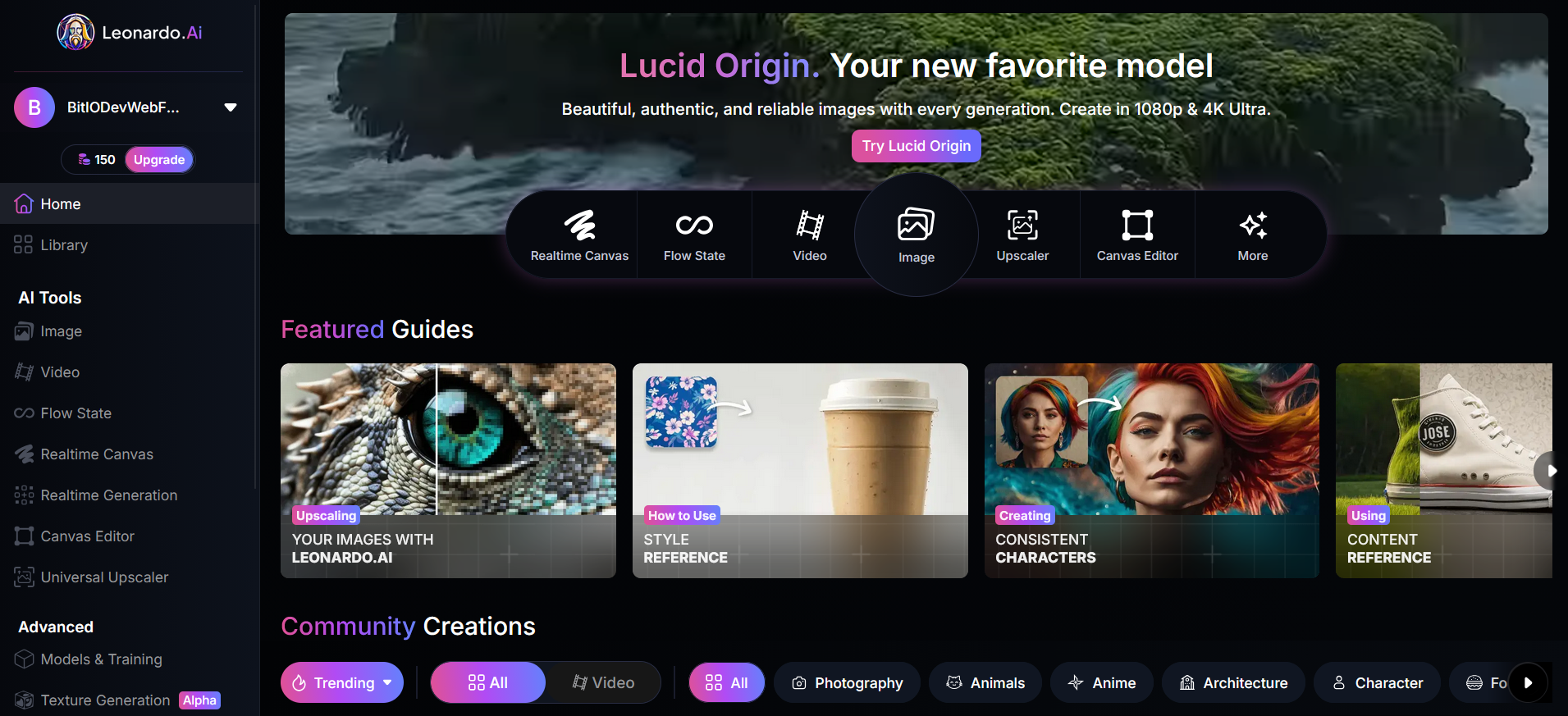
📘 Overview of Leonardo AI
👉 Summary
Leonardo AI has established itself as one of the noteworthy AI solutions in the images and creation space. Leonardo AI is an AI tool for image generation and illustration. In this comprehensive review, we examine Leonardo AI from every angle: its core features, real-world use cases, genuine strengths, known limitations, and pricing structure. The goal is simple — to give you everything you need to decide whether Leonardo AI fits your specific needs, workflow, and budget. Leonardo AI helps you speed up image generation and illustration with practical workflows. Use it to generate variants, improve clarity, and keep outputs consistent across channels. Whether you're a freelancer, a small business owner, a marketing lead, or simply curious about what AI tools can deliver today, this guide provides a pragmatic, structured perspective on the product. We also touch on alternatives and the broader competitive context so you can make a fully informed decision.
💡 What is Leonardo AI?
Leonardo AI is an AI-powered platform built to address specific needs in the images and creation domain. Leonardo AI helps you speed up image generation and illustration with practical workflows. Use it to generate variants, improve clarity, and keep outputs consistent across channels. Best results come from clear inputs and a quick human review before publishing. Functionally, the solution focuses on the following themes: generative art, illustration, mockups. It targets a broad audience, from independent professionals to structured teams, with a clear promise of saving time and improving the quality of deliverables. Like every modern AI product, Leonardo AI evolves regularly with new features and model upgrades. The vendor places strong emphasis on user experience and ease of onboarding, two dimensions that have become essential in today's AI tooling market. The vendor places strong emphasis on user experience and ease of onboarding, two dimensions that have become essential in today's AI tooling market.
🧩 Key features
The feature set of Leonardo AI covers a broad scope, tailored to the real-world workflows of professionals. Here are the key capabilities highlighted by the product: Strong image generation workflows with quick iteration. Useful presets and templates for repeatable results. Good quality for common tasks with quick iteration. Helps reduce manual editing time with smart rewriting. Easy to adopt for teams and non-technical users. Beyond core functionality, Leonardo AI includes ergonomic touches that matter in daily use: an interface designed to flatten the learning curve, shortcuts and automations to speed up repetitive tasks, and customization options to fit specific workflows. The vendor ships frequent updates that expand the product, which is a positive signal about its long-term roadmap. Integration with third-party tools is another key consideration: depending on the plan, connectors or an API let you wire Leonardo AI into an existing stack (CRM, office suite, project management). Output quality depends heavily on input quality and initial setup — true of any AI tool. Finally, on the collaboration side, Leonardo AI typically offers sharing and team management options across most plans, useful as soon as you grow beyond individual use. A discovery phase on advanced features pays off — many of them only reveal their value through regular use.
🚀 Use cases
Use cases for Leonardo AI are diverse and depend on the user's profile. The tool is particularly well suited to the following situations: Creators generating visuals quickly. SMBs improving day-to-day productivity. Marketing teams iterating on messaging. Non-native writers improving clarity. In the daily life of a marketing team, Leonardo AI accelerates the production of recurring deliverables, frees time for strategic thinking, and reduces dependency on external providers for routine tasks. For freelancers and small teams, the tool acts as a productivity multiplier — letting you absorb a higher volume of work without immediate hiring. In agency or scale-up contexts, the focus shifts to industrialization: standardizing processes, ensuring consistent quality, and building internal libraries of prompts or templates. In every case, real-world feedback shows that users who invest time upfront in setup get substantially better outcomes than those who stick with default behavior. It's worth noting that the same tool can serve very different use cases depending on how creatively it's woven into the workflow.
🤝 Benefits
Adopting Leonardo AI brings several tangible benefits. The first is direct time savings on tasks the tool handles, time that can be reinvested in higher-value work like strategy, customer relationships, or innovation. The second is improved quality and consistency of deliverables: by leveraging AI models and proven templates, output reaches a more uniform level of finish. The third is the learning effect: regularly using Leonardo AI builds adjacent skills (prompt engineering, information structuring, workflow automation). For marketing teams specifically, the tool also shortens test-and-optimize cycles, which translates directly into commercial performance. Finally, the economic leverage is measurable: at a moderate subscription cost, ROI is typically fast for intensive use cases. That said, these benefits must be weighed against the limitations covered below to set realistic expectations. Over time, the most structural impact is often organizational: teams that adopt the tool rethink their processes to make the most of it.
💰 Pricing
Pricing for Leonardo AI follows a familiar AI SaaS pattern: a free trial or freemium tier lets you test the tool before committing, then progressive paid plans unlock more capacity, advanced features, and higher usage limits. Higher tiers target teams and intensive users, adding collaboration features, access management, and computing priority. Before subscribing, define your expected quota (monthly volume, number of seats, specific features) to avoid both over-investment and frustration with an under-sized plan. Pricing may evolve — always check the official page for the latest details. A good practice is to compare annualized costs and factor in time saved, which is often the real ROI driver.
📌 Conclusion
In summary, Leonardo AI stands out as a serious option for images and creation. Leonardo AI is a strong option if you need to move faster on image generation and illustration without adding complexity. It shines in an editor-style workflow: start from a solid draft, generate a few alternatives, then keep the best parts and refine manually. Like any solution, it has watch-outs that should be weighed carefully against your specific context. Our recommendation is to test the tool with a real use case — a clearly scoped project, defined goals, and a measurable success indicator — before integrating it permanently into your processes. This approach validates the actual value delivered and helps calibrate the right pricing tier for your usage intensity.


